
Explore the complete UEFA Champions League winners list, from the European Cup era to the modern Champions League, with every winner, title records, historic dynasties, and the clubs that shaped European football.
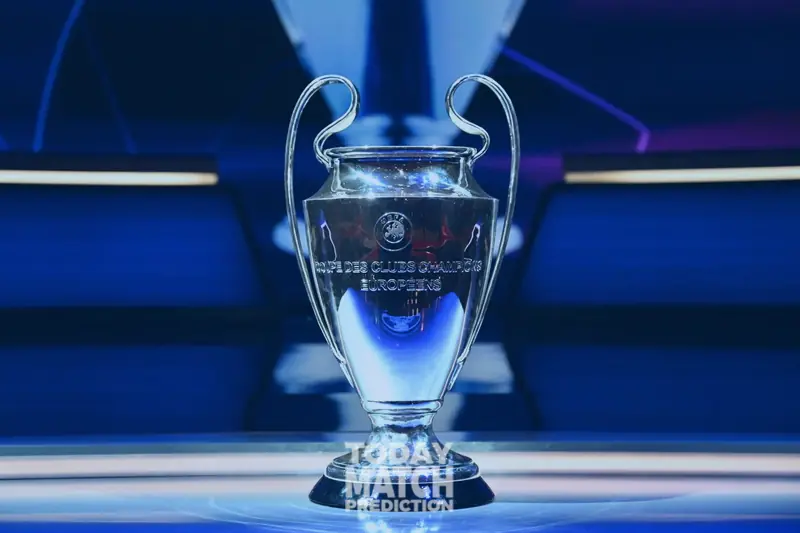
The complete history of every European Cup and Champions League winner, the dynasties that ruled Europe, and the clubs that defined the highest stage in club football
The UEFA Champions League winners list is one of the most important records in football because it tells a story that goes far beyond a simple roll of honour. It is a history of dominance, tactical evolution, institutional power, iconic finals, legendary players, and clubs that turned short periods of excellence into permanent continental prestige. Every team that has won the competition has done something extraordinarily difficult. It has come through the strongest opposition in Europe, handled the pressure of knockout football, and reached a level that separated it from every other club on the continent.
That is what makes the Champions League different from every other club competition. Domestic titles can establish authority within a country, but winning in Europe places a club in a different category altogether. The Champions League or, in its original form, the European Cup, has always been the competition that defines greatness. Clubs can have outstanding league seasons, memorable cup runs, or even sustained domestic dominance, but when football history is written at the highest level, European triumph almost always becomes the most important line in the story.
The winners list is also a mirror of football history itself. It reveals how power shifted across decades, how certain countries or leagues rose to prominence, and how specific clubs built identities so strong that they became almost inseparable from the trophy. Some names appear once and remain romantic because of the rarity of their success. Others return again and again until they define entire eras. Real Madrid, AC Milan, Bayern Munich, Liverpool, Barcelona, Ajax, Inter, Manchester United, Chelsea, Manchester City, and now Paris Saint-Germain all occupy different places in that wider story, but each entry on the list represents a season of complete continental achievement.
In the modern era, the scale of the competition has become even greater. The Champions League is no longer simply a prestigious European tournament. It is a global sporting event followed across every continent, featuring the most valuable squads, the most famous managers, and some of the highest pressure nights in the game. Yet even with all the commercial growth, the core meaning has remained unchanged. To win it, a club must still prove that it can rise above Europe under maximum pressure.
The European Cup and the birth of continental prestige
The competition began in 1955 and 1956 as the European Champion Clubs Cup, better known as the European Cup. In concept, it was straightforward. The champions of Europes domestic leagues would compete to determine the best club side on the continent. In reality, it quickly became something much more significant. It created a continental hierarchy that had never existed in such a clear form before and gave clubs the chance to turn domestic status into international legacy.
No side understood that opportunity better than Real Madrid. Their five consecutive titles in the first five editions did more than establish early dominance. They gave the competition an immediate sense of grandeur. The European Cup did not begin as a modest tournament gradually building prestige. It began with one of the greatest dynasties football has ever seen. That shaped the aura of the competition from the very start and ensured that the winners list would always be judged against the standard set by Real Madrid.
The early European Cup was a brutally unforgiving tournament. There were no group stages, no extended campaigns, and very little room for error. One poor performance across a tie could end a clubs entire European season. That made the achievements of those early winners especially impressive. They had to travel into difficult environments, face unfamiliar tactical styles, and carry the pressure of representing their countries football culture on a relatively new stage. The winners from that era laid the emotional and competitive foundations of what the Champions League would later become.
Complete UEFA Champions League winners list by season
European Cup winners
1955 and 1956: Real Madrid
1956 and 1957: Real Madrid
1957 and 1958: Real Madrid
1958 and 1959: Real Madrid
1959 and 1960: Real Madrid
1960 and 1961: Benfica
1961 and 1962: Benfica
1962 and 1963: AC Milan
1963 and 1964: Inter Milan
1964 and 1965: Inter Milan
1965 and 1966: Real Madrid
1966 and 1967: Celtic
1967 and 1968: Manchester United
1968 and 1969: AC Milan
1969 and 1970: Feyenoord
1970 and 1971: Ajax
1971 and 1972: Ajax
1972 and 1973: Ajax
1973 and 1974: Bayern Munich
1974 and 1975: Bayern Munich
1975 and 1976: Bayern Munich
1976 and 1977: Liverpool
1977 and 1978: Liverpool
1978 and 1979: Nottingham Forest
1979 and 1980: Nottingham Forest
1980 and 1981: Liverpool
1981 and 1982: Aston Villa
1982 and 1983: Hamburg
1983 and 1984: Liverpool
1984 and 1985: Juventus
1985 and 1986: Steaua Bucuresti
1986 and 1987: Porto
1987 and 1988: PSV Eindhoven
1988 and 1989: AC Milan
1989 and 1990: AC Milan
1990 and 1991: Red Star Belgrade
1991 and 1992: Barcelona
UEFA Champions League winners
1992 and 1993: Marseille
1993 and 1994: AC Milan
1994 and 1995: Ajax
1995 and 1996: Juventus
1996 and 1997: Borussia Dortmund
1997 and 1998: Real Madrid
1998 and 1999: Manchester United
1999 and 2000: Real Madrid
2000 and 2001: Bayern Munich
2001 and 2002: Real Madrid
2002 and 2003: AC Milan
2003 and 2004: Porto
2004 and 2005: Liverpool
2005 and 2006: Barcelona
2006 and 2007: AC Milan
2007 and 2008: Manchester United
2008 and 2009: Barcelona
2009 and 2010: Inter Milan
2010 and 2011: Barcelona
2011 and 2012: Chelsea
2012 and 2013: Bayern Munich
2013 and 2014: Real Madrid
2014 and 2015: Barcelona
2015 and 2016: Real Madrid
2016 and 2017: Real Madrid
2017 and 2018: Real Madrid
2018 and 2019: Liverpool
2019 and 2020: Bayern Munich
2020 and 2021: Chelsea
2021 and 2022: Real Madrid
2022 and 2023: Manchester City
2023 and 2024: Real Madrid
2024 and 2025: Paris Saint-Germain
Real Madrid and the highest standard in European football
No club occupies the winners list with the same authority as Real Madrid. Their record is not only the strongest in numerical terms. It is also the most wide ranging in historical terms. They did not simply dominate one period and disappear. They won the first five editions, returned to the summit in the 1960s, re established themselves in the late 1990s and early 2000s, and then built another extraordinary cycle in the modern Champions League era. Their dominance stretches across different tactical periods, different football economies, and different generations of elite players.
That is what makes Real Madrid unique in European history. Many clubs can point to one golden era. Real Madrid can point to several. Their relationship with the competition has become almost cultural. The Champions League is not just an objective for the club. It is a major part of its identity. The winners list makes that impossible to deny. Again and again, when European football reaches its defining moment, Real Madrid reappear at the centre of the story.
Their modern era run was especially significant because it came in a format that is much more difficult to dominate repeatedly. Winning four titles in five seasons from 2013 and 2014 to 2017 and 2018 was one of the greatest sustained achievements in the history of the competition. Adding more titles in 2021 and 2022 and 2023 and 2024 only reinforced the sense that no club has ever owned this tournament in the same way.
The clubs that built the next tier of greatness
Behind Real Madrid, several clubs stand out as the great continental powers whose repeated wins made them permanent members of the European elite. AC Milan remain one of the most important names on the list because their triumphs came in multiple footballing worlds. They won in the European Cup era, dominated in the late 1980s and early 1990s with one of the most admired teams in history, and then added more Champions League era success to maintain that European identity.
Liverpool built a similarly rich continental legacy. Their four European Cup wins between 1977 and 1984 made them one of the defining clubs of that era, while their later Champions League triumphs restored their European authority for modern audiences. Few clubs have as much emotional association with the competition as Liverpool. The atmosphere, the comebacks, the sense of belief on major European nights all helped shape how the club is remembered on the winners list.
Bayern Munich represent another kind of greatness. Their history in the competition is built on structure, consistency, and institutional strength. They won three straight titles in the 1970s, then returned in later decades to prove that their continental status was not confined to one generation. When Bayern win Europe, it often looks like the result of a club built correctly from top to bottom. That stability has kept them close to the top of the winners hierarchy for decades.
Barcelona, meanwhile, built a legacy that is inseparable from style. Their first European Cup in 1991 and 1992 mattered because it confirmed their arrival at the highest level, but their later Champions League wins gave them something even more important: teams that changed how the game was discussed. Their titles in 2005 and 2006, 2008 and 2009, 2010 and 2011, and 2014 and 2015 were not just championship seasons. They were reference points for technical and positional excellence.
The same broad elite includes clubs such as Inter Milan, Manchester United, Juventus, Chelsea, Ajax and now Manchester City. Each belongs on this list for different reasons, but all of them represent periods in which European success became part of the clubs essential identity.
For readers who want daily football analysis and updated match insight, expert predictions and match coverage can be a useful reference throughout the season.
The winners that keep the competition romantic
One of the strongest features of the UEFA Champions League winners list is that it has never belonged only to permanent superpowers. It also preserves the memory of clubs whose triumphs remain extraordinary because they were so difficult to repeat. Nottingham Forest won back to back European Cups. Aston Villa lifted the trophy. Steaua Bucuresti became champions. Red Star Belgrade wrote themselves into football history. Marseille won the first edition under the official Champions League name. Porto managed to win in more than one era, proving that clubs outside the wealthiest group could still conquer Europe with the right timing and the right team.
These winners matter because they give the list texture and emotional depth. They remind football supporters that the history of the competition is not only about the richest or biggest institutions. It is also about the perfect season, the complete tactical plan, the extraordinary dressing room, and the rare moment when a club reaches its highest possible level exactly when the opportunity appears. Even in the modern age, when wealth has made the top end of the sport more concentrated, the memory of those triumphs keeps the European Cup and Champions League connected to football romance.
How the winners list tracks the evolution of football
The winners list is also one of the clearest ways to see how football evolved. The early Real Madrid titles belonged to a pioneering and open era. Ajax and Bayern in the 1970s represented tactical intelligence, structure, and institutional identity. The successes of Liverpool, AC Milan, Juventus and Inter reflected periods in which English and Italian clubs exerted major influence. Later, Barcelona and Real Madrid drove a long cycle of Spanish dominance. More recently, the rise of state backed or financially transformed clubs such as Manchester City and Paris Saint-Germain has reflected the modern economics of elite football.
Every era left a different kind of champion. Some winners were defined by technical superiority. Some were defined by tactical discipline. Some were emotionally stronger than everyone else in knockout situations. Some simply had a concentration of elite talent that no opponent could match. The trophy never belongs permanently to one style, but the list shows clearly that certain football ideas and certain institutional models dominate for stretches of time before the balance changes again.
Why winning this competition changes everything
The Champions League matters so much because it changes how clubs are remembered. A domestic title can confirm quality, but a European Cup or Champions League title transforms status. Clubs that win it once carry that achievement forever. Clubs that win it repeatedly become part of football aristocracy. That is why the winners list remains at the centre of every serious conversation about historical greatness in the club game.
It also transforms individual legacies. Great players are often judged by whether they conquered Europe. Great managers are frequently remembered by the campaigns in which they did. A Champions League title can define a generation. Multiple titles can define an era. The winners list is therefore not just about teams. It is also about football memory itself.
Final thoughts on the UEFA Champions League winners list
The UEFA Champions League winners list is one of the richest and most revealing records in the sport because it captures the rise of dynasties, the brilliance of singular teams, the endurance of great institutions, and the unforgettable seasons in which clubs reached the highest level available in football. It begins with the European Cup, grows through decades of tactical and cultural change, and continues into the modern Champions League era as the ultimate roll of honour in European club football.
At the very top stands Real Madrid, the club most closely associated with the competition and the clearest symbol of continental greatness. Around them stand other giants such as AC Milan, Liverpool, Bayern Munich, Barcelona, and a wider group of historic winners whose names still carry enormous weight in football culture. Together, they form a winners list that is far more than a historical record. It is the story of how Europe was conquered, season by season, generation by generation.
For anyone who wants to understand football at the highest club level, this list remains essential. It shows who reached the summit, who stayed there, who rose briefly and brilliantly, and who turned one great season into permanent historical significance. That is why the UEFA Champions League winners list remains one of the most important documents in world football.