
Explore the greatest tennis matches ever played, from classic Grand Slam finals to unforgettable battles that defined champions, rivalries, and the history of the sport.
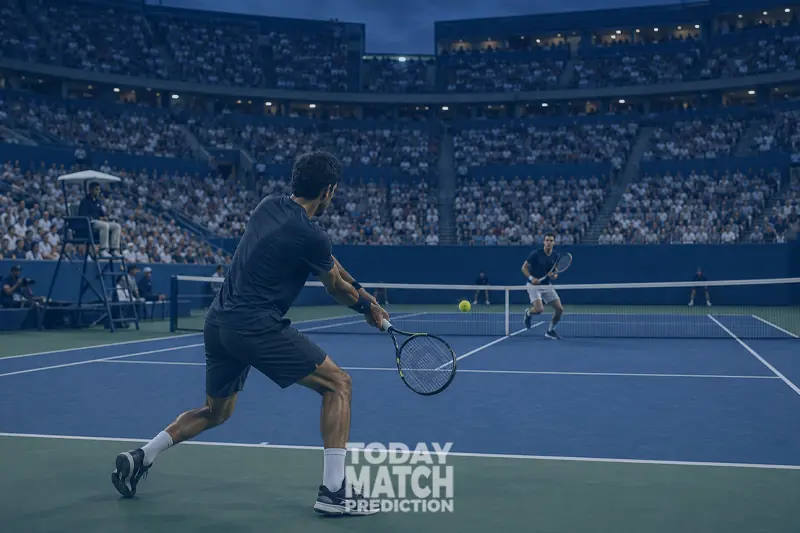
The battles that defined champions, transformed rivalries, and showed tennis at its highest level of skill, drama, endurance, and historical significance
Tennis has produced thousands of memorable contests, but only a small number deserve to be described as the greatest tennis matches ever played. Those rare matches are not remembered only because the score was close or because famous players were involved. They endure because they captured the full meaning of the sport at once. They offered technical brilliance, physical resistance, mental courage, tactical depth, emotional pressure, and a level of historical importance that turned a result into a permanent part of tennis memory. A truly great match does not end when the final point is played. It continues to live in debate, highlight reels, rivalry history, and the way future generations understand greatness.
That is what makes this subject so compelling. Tennis is uniquely suited to producing unforgettable drama because there is nowhere to hide. There are no teammates to absorb a bad stretch, no substitutions, and no clock that allows a player to simply protect a result. Every point must be played, solved, and survived. Momentum can shift in seconds, but the burden of response always remains personal. When a match rises to the highest level, it becomes more than a sporting event. It becomes a direct examination of character under pressure.
The greatest tennis matches ever played are also significant because they usually arrive at the intersection of quality and meaning. The sport has seen many matches of very high quality, but not all of them carried major historical stakes. At the same time, not every major final becomes a classic. The all time greats tend to emerge when enormous importance meets extraordinary execution. A Grand Slam title, a defining rivalry, a generational clash, a career turning point, or a battle for legacy gives a match its weight. The level of play then has to justify that weight. When both elements come together, the result can become part of the permanent architecture of the sport.
Another reason these matches endure is that they reveal the many different ways tennis can be great. Some classics are remembered for elegance and shot making. Others are remembered for survival and exhaustion. Some feel like tactical chess played at impossible speed, while others become emotional storms in which the players are forced to navigate pressure as much as the opponent across the net. The best matches often contain all of these things together. They become complete sporting experiences, rich enough to be appreciated by analysts, fans, and even people who do not follow tennis every week.
What makes a tennis match truly historic
A historic tennis match usually begins with context. A final at Wimbledon, the Australian Open, Roland Garros, or the US Open already carries meaning before the players walk on court. Add a rivalry, a fight for a record, a possible career milestone, or the sense that an era may be changing, and the tension becomes even greater. Great matches rarely appear from nowhere. They are usually built on a story that already matters. The contest then either confirms expectations or surpasses them.
The second essential element is sustained quality under pressure. Tennis fans can forgive brief nerves in a major final, but the greatest matches are those in which players continue to produce world class shot making when the stakes are highest. A great match is not only about endurance. It is about who can still serve bravely, return accurately, choose the right patterns, and execute with conviction when every mistake feels amplified. Those moments are what separate an epic from a classic.
The third ingredient is emotional movement. The most unforgettable matches are rarely simple. They contain reversals, recoveries, near finishes, rescued points, missed opportunities, and long stretches in which the outcome seems to change shape repeatedly. In tennis, drama often comes from that constant uncertainty. One player looks in control, then the other resists, then a tie break changes the mood, then a deciding set forces both into a different psychological reality. Matches become legendary when they refuse to settle into predictability.
For readers who like to follow the current side of the sport as well, daily tennis insights can be a useful reference point alongside the historic classics that shaped the game.
Wimbledon 2008: Rafael Nadal vs Roger Federer
If one match is most often placed at the top of the conversation, it is the 2008 Wimbledon final between Rafael Nadal and Roger Federer. This was not merely a meeting between the two best players of their era. It was a collision between the king of clay and the king of grass, between two contrasting styles, and between two players whose rivalry had already become central to the identity of mens tennis. Federer had dominated Wimbledon and seemed almost inseparable from Centre Court. Nadal arrived determined to prove that his greatness could stretch beyond clay and into the most traditional territory in the sport.
The final had everything that a great tennis match requires. Nadal started with fierce authority, taking the opening sets and forcing Federer into an uncomfortable position. Federer then responded like a true champion, surviving two tie breaks of enormous emotional weight to force a fifth set. Rain delays interrupted the flow, darkness gradually approached, and the atmosphere became increasingly dramatic. What made the match extraordinary was that the quality never disappeared beneath the tension. The rallies were purposeful, the serving remained brave, and the shifts in momentum felt earned rather than random.
When Nadal finally won in fading light, the match came to represent more than a title. It felt like a passing of power without diminishing the greatness of the champion who had lost. Federer was magnificent in defeat, Nadal was historic in victory, and the sport itself gained one of its defining masterpieces. That combination is why so many still regard Wimbledon 2008 as the greatest tennis match ever played.
Australian Open 2012: Novak Djokovic vs Rafael Nadal
If Wimbledon 2008 symbolises tennis at its most poetic, the 2012 Australian Open final between Novak Djokovic and Rafael Nadal symbolises tennis at its most punishing. This match was an examination of endurance, discipline, resistance, and will at a level rarely seen even in a sport famous for mental and physical strain. For nearly six hours, Djokovic and Nadal pushed one another into deeper and deeper layers of effort without allowing the quality to collapse.
What made this final so remarkable was the combination of length and substance. Long matches are not automatically great, but this one remained rich from beginning to end. The baseline exchanges were brutal, the defence was extraordinary, and neither player was prepared to concede emotional ground. Every hold felt earned. Every break felt costly. Every shift in momentum seemed to demand an answer of equal force. By the later stages, the match had become a pure test of competitive identity.
The image of both players exhausted during the trophy ceremony became one of the lasting symbols of modern tennis. Yet the final remains memorable not because the players were tired, but because they were still producing elite tennis deep into a contest that should have broken them long before. It remains one of the clearest examples of what happens when two all time competitors refuse to lower their standards under unimaginable pressure.
Wimbledon 1980: Bjorn Borg vs John McEnroe
The 1980 Wimbledon final between Bjorn Borg and John McEnroe remains one of the most culturally important matches in tennis history. It was not only a final between two brilliant players. It was a dramatic clash of personalities, styles, and temperaments. Borg represented calm, discipline, and icy self control. McEnroe brought touch, imagination, volatility, and open emotional intensity. That contrast alone made the contest compelling before a ball had been struck.
The match is remembered above all for its famous fourth set tie break, one of the most dramatic sequences the sport has ever produced. Point after point, McEnroe refused to yield, and the tie break became a test of nerve as much as skill. Yet the greatness of the match lies in more than that iconic passage. Borg recovered from the emotional force of that set, reset himself, and found a way to win in five sets. That response completed the drama. It showed not only how thrilling McEnroe could be, but how extraordinary Borg was under championship pressure.
This final still matters because it captured tennis as theatre without sacrificing quality. It was a historic major final, a rivalry milestone, and a collision between two visions of the game. Few matches have ever felt so complete in symbolic and competitive terms.
Australian Open 2017: Roger Federer vs Rafael Nadal
By the time Federer and Nadal met again in the 2017 Australian Open final, the rivalry already felt legendary. That is precisely why the match carried such emotion. Both men had battled injuries. Both had already achieved everything. Many believed the defining chapters of their rivalry were in the past. Instead, they produced one more major final of immense quality and meaning, reminding the sport that greatness does not always belong only to youth or momentum. Sometimes it belongs to reinvention.
The match stood out because Federer changed the geometry of the rivalry. Rather than simply absorbing Nadal pressure in old patterns, he attacked more boldly, particularly from the backhand side, and looked determined to impose his own terms. Nadal, as always, brought competitive depth, intensity, and the ability to drag a match into uncomfortable spaces. The result was a final that felt both familiar and entirely renewed. It carried the memory of their past while proving that both players were still capable of evolving.
Federers victory in five sets gave the match enormous historical power. It was not only a title. It was a late career masterpiece that altered how the final phase of his career would be remembered. Nadal, even in defeat, enhanced the match through his refusal to disappear. The final remains one of the great modern examples of how experience, adjustment, and legacy can combine to create something unforgettable.
Wimbledon 2019: Novak Djokovic vs Roger Federer
The 2019 Wimbledon final deserves its place among the greatest tennis matches ever played because it revealed the cruelty and precision of championship pressure at the highest level. Federer played magnificent tennis and seemed to have much of the emotional current of the day on his side. The crowd wanted another Wimbledon triumph from him, the stage suited him, and the match often appeared to be leaning toward one more iconic victory.
Yet Djokovic has built much of his greatness on his capacity to ignore the story others want to tell. He remained composed, survived difficult stretches, and kept forcing the match into the narrowest possible psychological territory. The final became historic because of its finest margins. Federer held championship points. He came within a few moments of one of the most celebrated wins of his career. Djokovic resisted, absorbed, and ultimately took the match through a final set shaped by unbearable tension.
This final remains unforgettable because it exposed the merciless truth of elite tennis. A player can perform brilliantly and still lose. Another can appear on the brink of defeat and still find a path through. That emotional contradiction gave the contest its unique place in tennis history. It was not the most romantic great match, but it was one of the most psychologically compelling.
French Open 1984: Ivan Lendl vs John McEnroe
The 1984 French Open final often receives less mainstream attention than certain Wimbledon epics, but any serious list of the greatest tennis matches ever played should include it. John McEnroe arrived at Roland Garros playing astonishing tennis and appeared poised to complete the title. Ivan Lendl, however, produced one of the great reversals in major final history. The match did not simply decide a Grand Slam champion. It changed how both men were viewed.
McEnroe carried the brilliance, the flair, and much of the early control. Lendl carried patience, endurance, and a refusal to accept the shape of the match as fixed. As the contest developed, it became a study in shifting belief. Lendl slowly rebalanced the emotional structure of the final, absorbing pressure and forcing McEnroe into deeper frustration. By the time the match turned fully, it felt less like a comeback and more like a transformation.
This final matters because great matches often do more than produce drama. They alter careers. Lendl became a major champion in the fullest sense, while McEnroe suffered one of the most painful defeats of his life. That kind of historical consequence gives a match lasting power far beyond the immediate spectacle.
Wimbledon 2001: Goran Ivanisevic vs Pat Rafter
Not every all time classic is built on the cleanest technical standard. Some become immortal because of emotional weight, atmosphere, and the uniqueness of the story. That is exactly why the 2001 Wimbledon final between Goran Ivanisevic and Pat Rafter remains so beloved. Ivanisevic was a wildcard, a former finalist, a player whose huge serve had carried him close to glory before, but never all the way. Rafter brought class, athleticism, and a calm competitive dignity that made him the perfect opponent for such a tense occasion.
The match was nervous, uneven in places, and filled with emotional strain. That is precisely what made it so compelling. Wimbledon had seen great champions before, but this final carried a sense of destiny and fragility that felt deeply human. Every service game in the closing stages seemed heavy with the possibility of redemption or fresh heartbreak. When Ivanisevic finally served out the title, the release was overwhelming.
This final belongs in any serious conversation because sport is not remembered only through technical perfection. It is also remembered through human truth. Ivanisevic winning Wimbledon as a wildcard remains one of the most emotional endings the sport has ever seen, and the match itself captured that feeling beautifully.
The womens matches that belong in the same conversation
Any complete and professional discussion of the greatest tennis matches ever played must include the womens game, which has produced classics of equal historical and emotional value. The 1985 French Open final between Chris Evert and Martina Navratilova remains one of the defining matches of one of the greatest rivalries in sport. It brought together two contrasting champions whose styles, personalities, and historical significance gave every meeting exceptional weight. The quality and importance of their battles helped define an era of womens tennis.
The 1999 French Open final between Steffi Graf and Martina Hingis also deserves mention because it combined tactical drama, emotional intensity, and a major turning point in legacy. Graf, one of the most complete champions the sport has ever seen, fought through a difficult and chaotic final to secure one of the most memorable major victories of her career. The match remains one of the most emotionally charged womens finals in modern history.
The 2018 Wimbledon final between Angelique Kerber and Serena Williams may not always appear in popular lists of all time classics, but from a professional perspective it stands as a high level example of composure, tactical execution, and the meaning of seizing a major moment against one of the greatest players ever. More broadly, Serena Williams career itself featured several major matches that shaped the sports memory, particularly against Venus Williams, Justine Henin, and later generations who challenged her dominance.
Any serious study of tennis history has to recognise that the greatest matches are not confined to one tour. The womens game has produced rivalries, finals, and pressure filled contests that carry the same historical significance and emotional force as the best known mens classics. A full understanding of tennis greatness requires both.
For a broader daily view of tournaments, player news, rankings, and match coverage across the sport, tennis news and results remains one of the standard reference points many readers follow.
Why these matches still define the sport
These contests still matter because tennis keeps returning to them when trying to explain itself. New major finals are measured against them. Rivalries are compared with them. Players inherit the burden of their standard when a match begins to feel important. That is how classics remain alive. They do not sit in the past quietly. They continue to influence how the sport is watched in the present.
They also prove that greatness in tennis can take many forms. It can be beautiful, as in the finest grass court finals. It can be punishing, as in the most demanding baseline wars. It can be symbolic, as in a rivalry that defines an era. It can be emotional, as in a long awaited title finally secured. The greatest matches endure because they reveal those different forms of greatness without contradiction. They show that tennis is at once art, endurance test, psychological duel, and public drama.
Final thoughts on the greatest tennis matches ever played
The greatest tennis matches ever played remain at the top of sporting memory because they offered more than winners and losers. They gave the sport its most dramatic afternoons, its most unforgettable evenings, and its clearest images of what champions look like when pushed to the edge. Whether the conversation begins with Nadal and Federer at Wimbledon in 2008, Djokovic and Nadal in Melbourne in 2012, Borg and McEnroe in 1980, Federer and Nadal in 2017, or the many other classics that shaped different generations, the same truth runs through all of them. These were matches that made tennis feel timeless.
That is the real test of a sporting classic. It should not fade when the trophy is lifted. It should continue to live in memory, in argument, in admiration, and in the standards future players are asked to meet. The best tennis matches do exactly that. They remain at the summit of the sport because they turned competition into history and history into legend.